


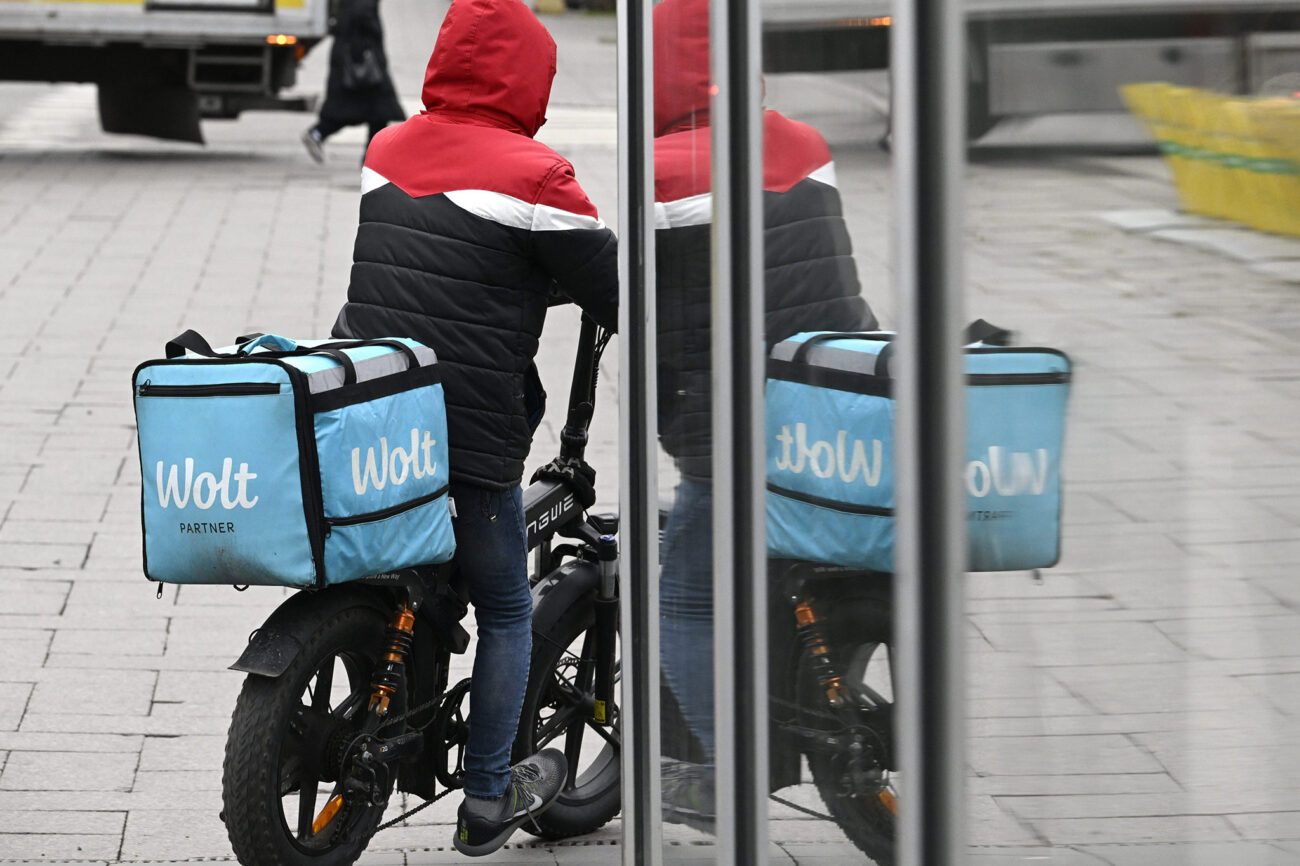
Photo: Heikki Saukkomaa / Lehtikuva.
Finnish Supreme Administrative Court determines that food couriers are employees
The Supreme Administrative Court of Finland (KHO) issued a long-awaited and highly significant judgement on Thursday, ruling that food delivery workers are employees within the meaning of the Employment Contracts Act. SAK has welcomed the new judgement.
“We now have a clear legal response to the problem of systematically misclassifying employees. This judgement shows that employers may not evade their responsibilities by calling their workers self-employed when they are really employees,” insists SAK President Jarkko Eloranta.
The KHO judgement brings crucial clarity to the legal status of platform workers in Finland. It confirms a position that has long held true in practice: couriers working under the direction of a platform business are not self-employed, but employees in the normal sense with all employee rights.

“The new judgement also has broader significance, bringing much-needed clarity to a situation in which the decisions of various judicial bodies in matters of platform work have been unstable and inconsistent. This KHO precedent will now guide future legal practice, and also require public authorities to recognise the true nature of platform work,” Jarkko Eloranta explains.
The KHO judgement found that even though there are some features of self-employment in the work of food delivery workers, this work nevertheless fulfils all of the elements of employment specified in the section on the scope of application of the Employment Contracts Act. The de facto control exercised by the employer is evident in its ability to direct and supervise the work through the digital platform, setting quality standards and influencing the work of food couriers in many ways. This means that the courier’s formal independence is a mere façade arising within a context of real employment.
The KHO judgement also accommodates the effect of cases decided at the European Court of Justice, which has preferred a broader interpretation of employment. KHO has now taken a clear position, insisting that the concrete elements of employment are decisive, regardless of any labelling of the relationship as self-employment.
Jarkko Eloranta regards this KHO judgement as a decisive turning point in the campaign to strengthen the rights of platform workers.
“We are now finally in a position to ensure that food couriers enjoy the same rights as other employees. These workers must be guaranteed the right to negotiate their own working conditions and job security, including such aspects as statutory accident and occupational disease insurance, and earnings-related social welfare benefits.
The KHO judgement has now made it clear that real employment may not be obscured by misclassifying employees or disguising their work as self-employment. This is an important step towards equitable treatment of platform workers and fair play at work.”